




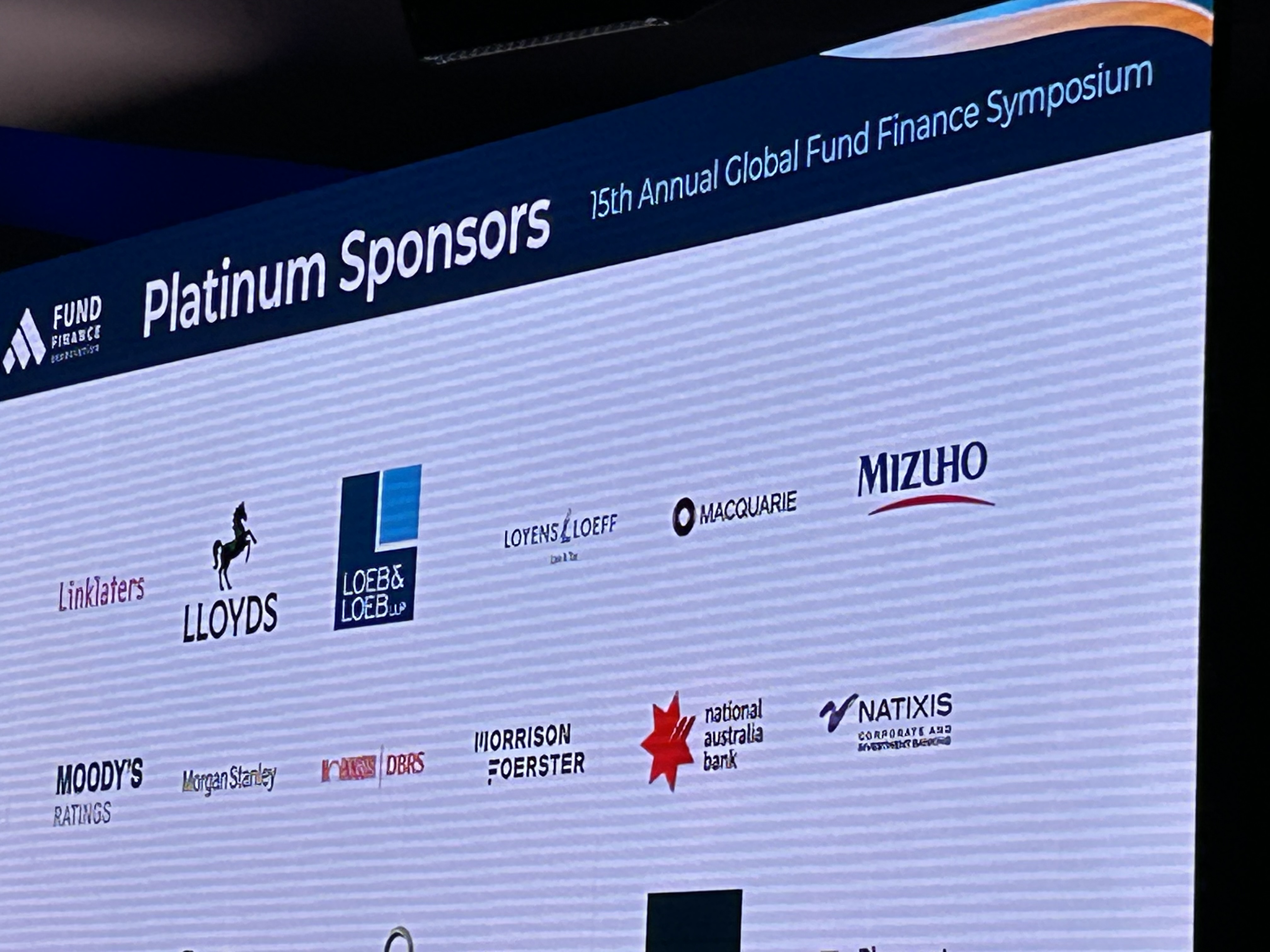
Loeb sent its largest team yet to the 2026 Fund Finance Association's (FFA's) annual conference, and we weren't alone, as the 3000+ attendees set a new record in the conference's 15th edition. It was great to catch up with many friends and clients, although it was also a challenge to carve out time to see everyone. FFA and the Fontainebleau's great staff managed the unseasonably brisk Miami weather well, resulting in zero reported instances of cold-stunned iguanas falling from trees onto Loeb lawyers or our clients.
The overall Miami message was optimistic for continued growth in the space and evolution of financing structures for funds. Bank lenders who just a few years ago said they couldn't do a NAV or hybrid are now more fluent in those products, and we're seeing more banks (as opposed to specialty credit funds as lenders with higher spreads) offering those solutions.
That said, the optimism was tempered by practicality. Without attributing sentiments to specific speakers and their employers (which is frowned upon at the conference), many large fund managers acknowledged that they need to do better at returning capital to investors to improve fund raising prospects, and that LPs may need to do more with less in the interim, and acknowledge that they're unable to allocate to all sponsors. That could result in larger LPs exerting pricing power (in the form of lower management fees, among other concessions) where funds are able to demonstrate that they can deliver above-mean performance.
Here's our brief recap of some of the conference sessions for those who were unable to make it in person, or who were tied up in client and prospect meetings during the day:
Macro Market Updates:
- Risk appetite remains strong. Larger banks showed mid-double digits portfolio growth size in 2025, and more willingness to explore NAV/hybrid structures to improve yield given spread compression in sublines. With that growth has come more scrutiny from regulators, but nothing insurmountable to date.
- There's more concentration among bank groups, as lenders are able to write larger checks; $2 billion deals that used to have eight lenders now only have four or five. Sponsors are expecting meaningful commitments from banks.
- Some larger sponsors are saying no to investors who want smaller SMAs—it's a difficult balance to scale and have consistency across a sponsor platform, but perhaps tech improvements will allow sponsors to say “yes” more frequently in the future. More banks are walking away from SMAs where high profile investors are refusing to sign investor consent letters, which will hopefully end that brief but unfortunate trend that crept into the market a couple of years ago.
- It's easier for banks to reward higher-utilized facilities. Underutilized facilities are less likely to see fee concessions from their lenders when they come up for renewal.
- More banks are looking into SRTs and tranching where a subline has been drawn for a few years with no clean-down—those structures are easier to bring in an insurance company as a lender (as are longer-dated NAVs with term loans).
Middle Market Manager Financing Structures:
- This topic is near and dear to my heart, as I am a member of the new FFA subcommittee for the middle market, and Loeb partner Rich Facundo was the moderator of this panel.
- This panel focused on common financing structures in the space and how they work. This may seem rudimentary given the proliferation of panels on NAV structures, insurance company involvement and securitizations, but the reality is that a large portion of the industry is newer to the space and is not engaging regularly with the most sophisticated structures.
- The biggest comment I heard is that this panel should have been on day one of the conference as a building block for those newer entrants as opposed to day three. We'll work on that for 2027.
- Stay tuned for the FFA NY conference on Oct. 15, where these topics and our subcommittee will play a larger role to discuss these important topics in more depth.
Continuation Vehicles:
- We've seen more CVs as sponsors try to maximize value of investments. Estimated CV market size has increased 10x over the past five years.
- Four to six years may not be a sufficient realization period for many assets. CVs may be more useful to maximize value than secondary investments in this space. One panelist estimated that 10% of transactions in 2025 that would have been a secondary deal found their way into a CV instead.
- Another panelist estimated that where only 4-5% of investors would consider rolling their commitments a few years ago, ~15% of investors are now rolling commitments when a CV is proposed.
- While Loeb has been seeing more sublines in the CV space, we and some panelists agree that NAVs and hybrids could be a better structure for a CV.
Regional Market Comparison:
- North America is the most mature market for fund finance, with sublines as the predominant product.
- NAV adoption is improving in the EMEA and APAC. Focusing on the use of proceeds and dividend recaps are increasingly disfavored.
- Japan has published a model LPA in English in the past year which facilitates sublines, but liens on deposit accounts are a point of tension in that jurisdiction.
- CRD-6 implementation in Europe has been delayed, and its impact on the fund finance market.
GP Perspectives / CFO Panel / Institutional Investor Panel:
- Although these were three separate panels, their themes overlapped substantially.
- Sponsors appreciate the continued evolution of products in the space to make their lives easier, specifically citing trancing and Term Loan Bs.
- GPs ask that lenders be proactive in approaching sponsors with potential product ideas— lenders will know that space and what they can offer best, and should partner with funds to evaluate structures that will improve fund performance.
- At least one GP is frustrated by how many emails it takes to close a deal. To that GP: It's always best to partner with commercially reasonable and efficient counterparties (call us!).
Securitization and Bank Balance Sheet Management Tools:
- Some transactions will lend themselves to a securitization and the improved capital treatment that such structures presently offer. While sublines are IRR efficient for sponsors, these structures can be capital relief efficient for banks with a similar analysis.
- That said, there is a cost associated with these structures on the legal end and it's a pure math question as to whether spending $100,000+ in legal fees to save 20 bps is effective for a given deal when considering whether to retrofit a transaction on a deal-by-deal basis. Given how tight spreads are presently, adding this structure creates expense and hurts margins on all sides of the transaction.
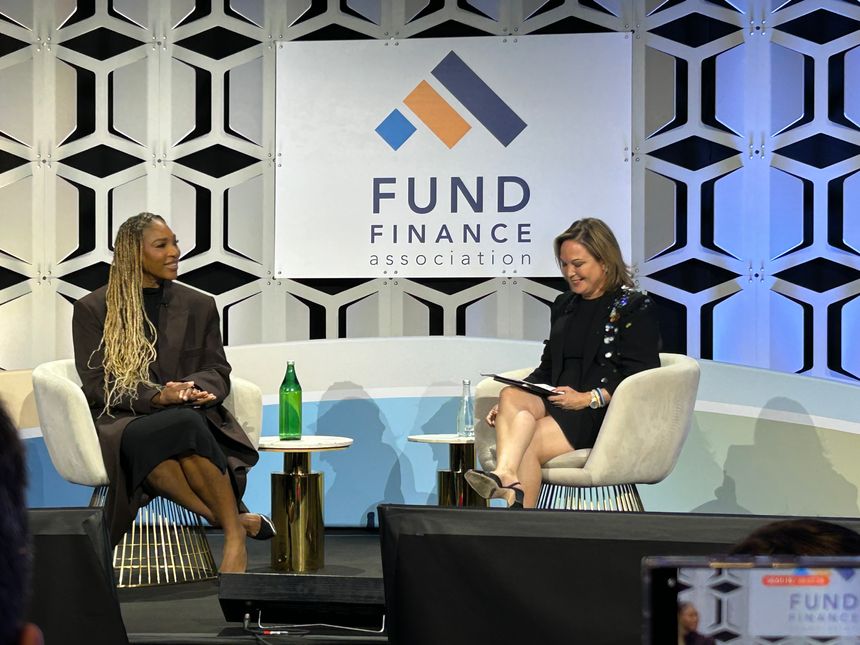
Conference keynote speaker Serena Williams reminded a packed room of fund finance professionals that when facing a difficult project, sometimes the only way out is through. That philosophy also served well when negotiating the throngs in the lobby bar of the Fontainebleau all week, and as inspiration when thinking about the next phase of the fund finance market and the year ahead. Loeb is grateful for the support of its many clients in this space and the size and stability of our team at a time when there's been significant recent dislocation among fund finance lawyers. The 2027 conference will be back in Miami Feb. 1-3, and we will be there as always.
/Passle/63ef8bdcf636e911c850090e/SearchServiceImages/2026-02-26-05-54-07-760-699fdfff84138579a555b860.jpg)
/Passle/63ef8bdcf636e911c850090e/SearchServiceImages/2026-02-24-00-07-58-135-699cebdeca5dac48b63fecb7.jpg)
/Passle/63ef8bdcf636e911c850090e/SearchServiceImages/2026-02-19-23-29-48-584-69979cecff07facd13d3fdfd.jpg)