


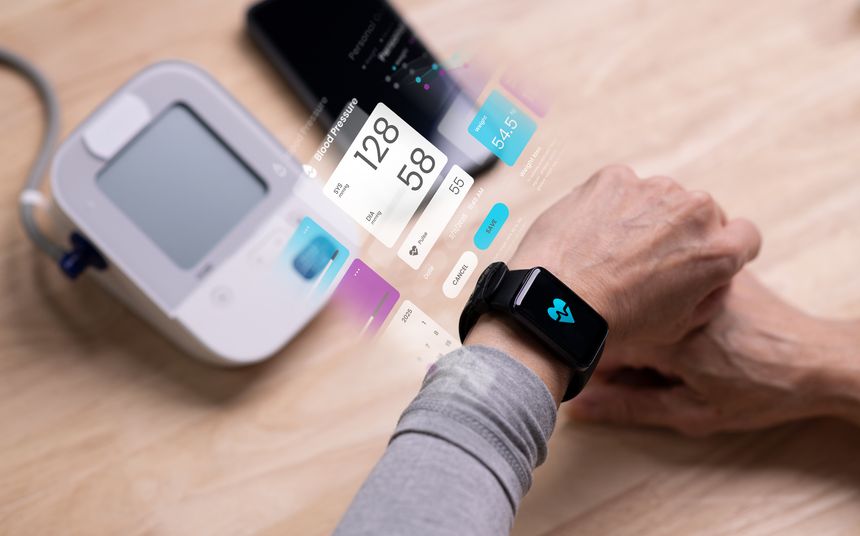

Since 2019, companies that offer software and/or hardware devices aimed at promoting consumer health and wellness have had little more to rely on than a single short U.S. Food and Drug Administration (FDA) guidance document to determine whether their product qualifies as a “general wellness product” that falls outside the scope of active regulation by FDA as a medical device. The ability for a device to go straight to market without the numerous regulatory obligations that apply to traditional "medical devices" can have a significant impact on market strategy, costs and timing of product launch.
That changed last week when FDA issued an updated final guidance titled “General Wellness: Policy for Low Risk Devices” on January 6, 2026. While FDA's formal definition of a general wellness product remains intact, the updated guidance allows for more leeway on the types of products that may qualify as a non-regulated general wellness product and provides additional examples of wellness devices—with a particular focus on wearables and other sensor-based devices that measure health metrics, including blood pressure and glucose. While this is largely a win for industry, the guidance raises as many questions as it answers regarding: (1) whether sensor-based outputs may provide results that still imply a medical condition subject to FDA oversight; and (2) how brands practically apply FDA's very nuanced criteria to remain within the low-risk wellness category. Notably, FDA issued the document as a “final” (vs. draft) guidance, which allows more limited formal opportunity for stakeholder input. Below, we break down what has and has not changed.
What Hasn't Changed:
- Overarching Definition of a “General Wellness Product” Device: FDA continues to define this category as those devices that: (1) are intended for only "general wellness use;" and (2) present a low risk to the safety of users and other persons. A “general wellness use” is defined further as an intended use that relates to: (a) maintaining or encouraging a general state of health or a healthy activity; or (b) the role of a healthy lifestyle in helping to reduce the risk or impact of certain chronic diseases or conditions and where it is well understood and accepted that healthy lifestyle choices may play an important role in health outcomes for the disease or condition.
- “Low-Risk” Requirement: FDA continues to emphasize that the devices in this category must be “low risk,” meaning that they pose little risk of patient harm if regulatory controls are not applied. Devices that are invasive, implanted or involve interventions or technologies (e.g., lasers, radiation, microneedling the stratum corneum) that could pose safety risks are not considered low risk by FDA.
What Has Changed:
More Sensor-Based Products/Wearables as Wellness Products: The biggest change to the wellness framework is FDA's willingness to expressly include more devices that use sensor-based technology to measure physiological metrics (including blood pressure, glucose and heart rate variability) as eligible for the wellness category so long as the “outputs are solely for wellness use” and are not invasive/implanted and not intended for diagnosis, mitigation, cure, prevention or treatment of a disease. Further, FDA makes clear that such products must not: (a) be intended as a “substitute” for an FDA-authorized/cleared/approved medical device; (b) include any claims, functions or outputs that “prompt or guide specific clinical action or medical management;" or (c) include values that “mimic those used clinically" unless those values are adequately “validated” by robust scientific literature.
Prior to the guidance, FDA had taken the position that a device such as a blood pressure monitor that had the same features and output measures as a regulated device inherently created a medical device intended use, regardless of the specific claims. However, FDA is now suggesting that sensors that provide blood pressure and glucose measurements are not necessarily devices so long as the claims are only for wellness use. What is less clear, however, is how FDA intends to apply the prohibition on measurements that may imply a substitute for or mimic those of FDA-cleared devices, or prompt medical action. Are alerts for high outputs ever okay? Can there be any threshold limits on normal ranges? Can the device suggest that a measurement is abnormal? This guidance would suggest perhaps not (or at the very least, there is a fine needle to thread to stay within the wellness category).
- Additional Examples—Blood Pressure and Glucose Monitoring: FDA also provides more illustrative examples of wellness products, particularly in the context of blood pressure monitors and glucose monitors for wellness. For example, a wearable that provides blood pressure via photoplethysmorgram could be a wellness product so long as there is no reference to a specific disease and the outputs use validated values (e.g., peer-reviewed clinical studies). In contrast, a glucose monitor that also measures glucose and uses only a wellness claim while being contraindicated for pre-/diabetics would be an appropriate wellness claim but would not be eligible for this category if it uses "minimally invasive microneedling technology," as FDA considers such penetration of the stratum corneum as not “low risk."
Lingering Questions and What Brands Should Consider:
While FDA's revised guidance should largely be seen as a win by the growing wellness device industry, as it demonstrates a willingness to include more devices as eligible for this non-regulated category, there are open questions as to how brands should practically interpret and apply FDA's criteria, particularly those devices that monitor biometrics and physiological parameters. For example:
- How does a blood pressure sensor appropriately ensure that its implied claims do not suggest any use in a medical context? Perhaps this can be addressed via contraindications or disclaimers.
- How practically useful are these tools if they are prohibited by FDA to suggest that a health measurement is “high,” “low” or otherwise outside normal bounds?
- Where does artificial intelligence (AI) fall into all of this, as it is not addressed in the guidance, and does the use of AI raise more questions as to whether FDA would consider a device to use “clinically validated" outputs for physiological parameters?
What we do know is that brands should carefully read the guidance and speak with counsel to determine whether FDA's updated approach may allow them to take greater advantage of the wellness product category, and if brands head down this path, what the “watch outs” are to not stray into regulated device territory.
/Passle/63ef8bdcf636e911c850090e/SearchServiceImages/2026-03-13-02-03-30-016-69b37072236aebe161774bd4.jpg)
/Passle/63ef8bdcf636e911c850090e/SearchServiceImages/2026-02-27-19-47-59-327-69a1f4ef8e3a24fe05f7c828.jpg)
/Passle/63ef8bdcf636e911c850090e/SearchServiceImages/2026-03-02-22-08-35-766-69a60a63263833a62ebe4390.jpg)