


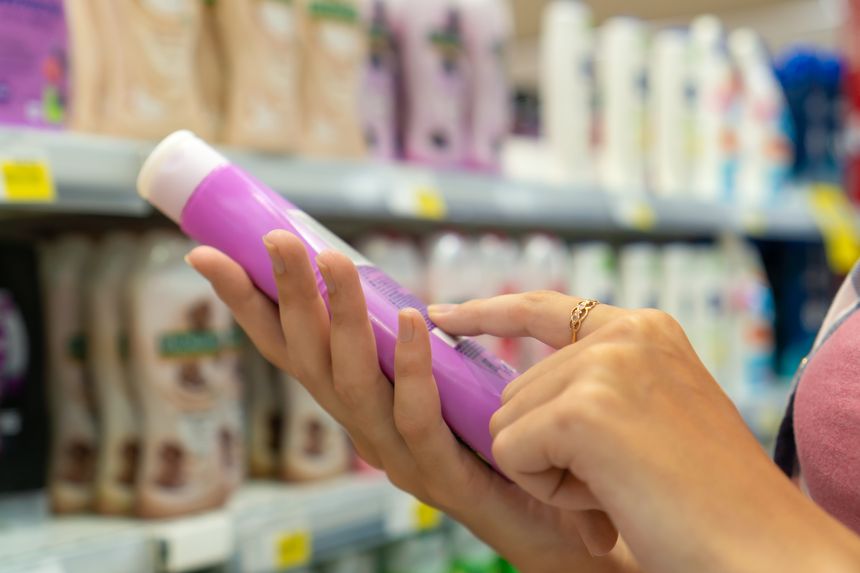

Assuming the title of this article prompted you to read on, it probably comes as no surprise to you that consumers' interest in the safety and quality of their skincare, fragrance and related personal care products is at an all-time high, and serves as a critical driver of purchasing decisions.
Capitalizing on this trend, brands have heavily invested in formulating their products to reduce potential health and environmental impacts (and to comply with state ‘toxic-free’ laws as we have written about previously). These efforts include the use of more plant-based and naturally derived ingredients, while trying to minimize substances such as phthlataes, parabens, heavy metals, PFAS and more. Brands are also investing in their packaging to use more environmentally conscious sources (and again to comply with state Extended Producer Responsibility (EPR) laws).
All of these efforts cost time, money and resources. Not surprisingly then, brands want to tout their product quality attributes to such health-conscious consumers. Yet, doing so can come at a hefty price: a class-action false advertising lawsuit.
Since 2020, we have seen a huge surge in the number of lawsuits filed against cosmetic and personal care product brands alleging that product quality claims are false and misleading in violation of FTC advertising laws and related state consumer protection laws. Such lawsuits target not only brands but also retailers, like this Ulta lawsuit (and the 2024 Sephora lawsuit discussed below). While class action claims historically focused on broad “all natural” claims, attacks advertising a product as “clean,” “toxic-free,” “plant-based,” “safe” or "free of" are on the rise.
False advertising lawsuits focused on safety and quality are particularly attractive to the plaintiffs for several key reasons: (i) the strict substantiation requirements for health, safety and environmental claims under the Federal Trade Commission's (FTC's) Green Guides and Health Products Compliance Guide; (ii) the U.S. Food and Drug Administration's (FDA's) spotlight on cosmetic safety under the Modernization of Cosmetics Regulation Act of 2022 (MoCRA) along with the rise of state “toxic-free” laws banning certain ingredients (as well as public databases like the California CPSP Database disclosing products containing such ingredients); (iii) the lack of a regulatory definition for many safety and quality claims; and (iv) increasingly sophisticated laboratory testing allowing plaintiffs to detect extremely low levels of alleged harmful substances in the products. Even when a brand has substantiation for its claims, there is some sense of inherent risk (or perhaps inevitability) of receiving a letter from a plaintiffs' attorney when a brand advertises its quality and safety attributes.
Key Question: What's a company to do? Will all efforts to product promote safety and quality attributes inevitably result in a lawsuit?
Answer: Not necessarily. While advertising products with health, safety and environmental claims presents at least some inherent risk of plaintiff (and competitor) scrutiny, companies can take several steps to help mitigate such risk while touting quality benefits. Below are five key strategies.
- Avoid Broad Unqualified Claims: Making broad, sweeping, unqualified safety and quality claims is one of the best ways to land a company a lawsuit. These include “non-toxic,” “plant-based” and “clean” among others, when used generally for a product as a whole, and where there is no specific definition of what these terms mean. In this situation, plaintiffs can easily allege that such terms imply that the product is entirely free from any substance that could potentially have a negative impact on human health or the environment—a virtually impossible standard to meet. Indeed, the FTC makes clear that an unqualified “non-toxic” claim presents a broad promise of no impact to humans or the environment and is likely inherently misleading. Yet, where a brand does provide a specific definition to an otherwise broad claim, risk can be mitigated. For example, Sephora was able to successfully toss a lawsuit in 2024 over its “Clean at Sephora” standard, where the retailer carefully and clearly defined for consumers exactly what ingredients were excluded from products that met this standard; thus, the court found that “clean” did not reasonably mean that the product was devoid of all possible non-clean ingredients. This can be a very effective strategy to undercut a plaintiff's broad definition of a quality or safety claim. There is a “watch out” under this strategy: a company must not define a safety or quality term too narrowly while permitting the product to still have ingredients that are well-known to be associated with health effects or otherwise appear on state “banned ingredient” lists.
- Obtain Testing/Documentation and Tailor Claims Specific to That Data: Another risk-mitigation option is fairly obvious but often overlooked—tailor your claims to your data. For example, if a brand has testing and documentation to show that there are no parabens, lead, phthalates or silicone, consider the claim “made without parabens, phthatlates or silicone,” while being careful not to overstep into a more general claim such as “safe” or “toxin-free.”
- Beware of “Free of” Claims: While consumers may not immediately perceive a difference between “free of” or “made without,” plaintiffs are particularly likely to exploit and attack “free” claims. This is because "free" and "free of" technically mean a zero amount from any source, including cross-contamination or unintentional substances produced as by-products of the manufacturing process. Thus, even where a product is made without lead as an intentionally added ingredient, this does not mean it is certainly “free of” lead as a by product (e.g., in colors, pigments) in the absence of finished product testing. Further, because laboratory testing methods have become increasingly sophisticated, brands should be mindful that plaintiffs may use labs that test to a very low limit of detection. Thus, if you are going to rely on finished product testing to make a “free of” claim, shop around to ensure your detection level is as low as possible.
- Invest in Your Supply Chain and Impose Strict Quality Standards: Given the global supply chain and the fact that most raw materials are sourced outside the U.S., brands are ultimately forced to rely on the quality of their supply chain when evaluating whether the product can support a quality attribute claim. Therefore, it is critical that your agreement requires the supplier to rep/warrant to strict compliance standards, and where possible, a brand should audit their suppliers and engage in independent finished product testing to verify the supplier's quality and safety documentation.
- Track your Products Against State “Toxic-Free” Laws: Finally, brands should carefully track the growing number of state laws imposing bans on certain ingredients in cosmetic and personal care products before advertising the products as “safe,” “clean” or “toxic-free” to consumers in that state. Such laws only increase plaintiffs' ability to attack additional substances as harmful to consumers.
Key Takeaways: Companies in the cosmetic and personal care space should not shy away from touting their quality and safety attributes in order to meet consumer expectations. Yet, it is important to understand the risks of doing so and to take steps to mitigate such risks. Even moderate steps to help tailor your claims to meet your substantiation data can go a long way to convincing a plaintiffs' attorney to look elsewhere when scrutinizing safety and quality claims. And, when in doubt, talk to counsel about the risks and nuances of a particular claim.
/Passle/63ef8bdcf636e911c850090e/SearchServiceImages/2026-03-02-22-08-35-766-69a60a63263833a62ebe4390.jpg)
/Passle/63ef8bdcf636e911c850090e/SearchServiceImages/2026-02-26-05-54-07-760-699fdfff84138579a555b860.jpg)
/Passle/63ef8bdcf636e911c850090e/SearchServiceImages/2026-02-24-00-07-58-135-699cebdeca5dac48b63fecb7.jpg)